
Lưu ý: Hình bìa chỉ mang tính minh họa — không phải ảnh sách thực tế. Nội dung và bản quyền sách được đảm bảo chính hãng từ nhà xuất bản. Chợ Sách chỉ cam kết sách do người bán cung cấp là sách chính hãng; khiếu nại về bìa khác hình minh họa sẽ được xem xét từng trường hợp.
DeWitt Clinton and Amos Eaton: Geology and Power in Early New York
Tác giả: David I. Spanagel
Tiết kiệm 885.000 ₫
Chi tiết sản phẩm
Mô tả nội dung sách DeWitt Clinton and Amos Eaton: Geology and Power in Early New York - David I. Spanagel
Thông tin sách: DeWitt Clinton and Amos Eaton: Geology and Power in Early New York (Hardcover, 284 trang) – Johns Hopkins University Press, 2014. Ngôn ngữ: Tiếng Anh.
How did geology and politics inform scientific ideas and contribute to New York's prominence in the early nineteenth century?
David I. Spanagel explores the origins of American geology and the culture that promoted it in nineteenth-century New York. Focusing on Amos Eaton, the educator and amateur scientist who founded the Rensselaer School, and DeWitt Clinton, the masterful politician who led the movement for the Erie Canal, Spanagel shows how a cluster of assumptions about the peculiar landscape and entrepreneurial spirit of New York came to define the Empire State. In so doing, he sheds light on a particularly innovative and fruitful period of interplay among science, politics, art, and literature in American history.
Book DescriptionHow did geology and politics inform scientific ideas and contribute to New York's prominence in the early nineteenth century?
From the Author I grew up in the Finger Lakes region of western New York. That region's mostly gently rolling hills, impossibly deep lakes, spectacular gorges along streams flowing toward almost every available compass point, and patches of extraordinarily fertile topsoil (where it was deposited by retreating glaciers) provided a beautiful and variegated landscape for hiking and watery adventures throughout my youth. I never studied geology as a university student, but when I began to research the history ideas about the Earth's history, I was inexorably drawn to the experiences of the people who tried to decode the mysterious and magnificent clues left behind by the complicated processes that shaped the topography of New York State. This book is the fruit of the lifetime I have spent loving that place, and of the years of research and contemplation that I have devoted to answering my questions about how that the geological history of that place was initially written. New York's geology captivated people from all walks of life in the early years of the republic, and it provided a major arena for early efforts to establish an independent set of ideas and professional practices in the American earth sciences. Much of what I now understand about geology as an especially challenging field for scientific data gathering and theorizing, I learned by seeing natural phenomena through the eyes of those ingenious early investigators, who had so many obstacles to overcome and so few ready-made tools to support their work. From the Inside FlapDavid I. Spanagel explores the origins of American geology and the culture that promoted it in nineteenth-century New York. Focusing on Amos Eaton, the educator and amateur scientist who founded the Rensselaer School, and DeWitt Clinton, the masterful politician who led the movement for the Erie Canal, Spanagel shows how a cluster of assumptions about the peculiar landscape and entrepreneurial spirit of New York came to define the Empire State. In so doing, he sheds light on a particularly innovative and fruitful period of interplay among science, politics, art, and literature in American history.
A significant contribution to our current understanding of the history of science between the first scientific revolution of the early modern period and the emergence of modern, professionalized science . . . Provocative and compelling.--American Historical Review
DeWitt Clinton and Amos Eaton provides the reader with a fresh exploration of the early American republic . . . Here is a volume chock full of good ideas and evocative questions.--Endeavour
A compelling story of the intersections between science and politics in the early decades of the nineteenth century.--The Journal of American History
What a good and interesting read this is, and that what is most novel and most striking are the numerous connections that others have perhaps seen--one here and one there--but that Spanagel has woven into a rich network that makes deep cultural sense.--Isis
An unfailingly interesting and informative book. It provides excellent insight into antebellum New York and neatly details how Clinton, Van Rensselaer, and Eaton had a profound impact on the intellectual and political life of New York.--British Society for Literature and Science
--Paul Lucier, author of Scientists and Swindlers: Consulting on Coal and Oil in America, 1820-1890 "British Society for Literature and Science" From the Back CoverDavid I. Spanagel explores the origins of American geology and the culture that promoted it in nineteenth-century New York. Focusing on Amos Eaton, the educator and amateur scientist who founded the Rensselaer School, and DeWitt Clinton, the masterful politician who led the movement for the Erie Canal, Spanagel shows how a cluster of assumptions about the peculiar landscape and entrepreneurial spirit of New York came to define the Empire State. In so doing, he sheds light on a particularly innovative and fruitful period of interplay among science, politics, art, and literature in American history.
"A significant contribution to our current understanding of the history of science between the first scientific revolution of the early modern period and the emergence of modern, professionalized science . . . Provocative and compelling."―American Historical Review
"DeWitt Clinton and Amos Eaton provides the reader with a fresh exploration of the early American republic . . . Here is a volume chock full of good ideas and evocative questions."―Endeavour
"A compelling story of the intersections between science and politics in the early decades of the nineteenth century."―The Journal of American History
"What a good and interesting read this is, and that what is most novel and most striking are the numerous connections that others have perhaps seen―one here and one there―but that Spanagel has woven into a rich network that makes deep cultural sense."―Isis
"An unfailingly interesting and informative book. It provides excellent insight into antebellum New York and neatly details how Clinton, Van Rensselaer, and Eaton had a profound impact on the intellectual and political life of New York."―British Society for Literature and Science
About the Author David I. Spanagel teaches courses in the history of science and technology at Worcester Polytechnic Institute in Massachusetts. He earned his Ph.D. in the history of science at Harvard University in 1996.Giá bìa: 1.900.000 ₫
1.015.000 ₫
Đánh giá sản phẩm(4)
Sách cùng thể loại
Xem tất cả → 0
0Through Hermopolitan Lenses: Studies on the So-called Book of Two Ways in Ancient Egypt (Probleme der Ägyptologie, 33)
Wael Sherbiny
10.189.000 ₫
 0
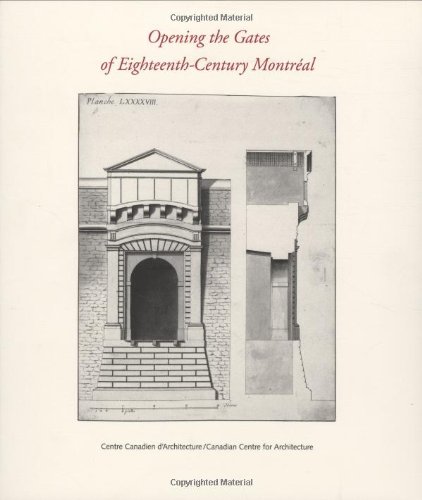
0Opening the Gates of Eighteenth-Century Montréal
Phyllis Lambert, Alan Stewart
Liên hệ
0 0
0Fonda, Johnstown, & Gloversville Railroad: Sacandaga Route to the Adirondacks
Randy L Decker
1.008.000 ₫
 0
0A History of Modern India
Ishita Banerjee-Dube
907.000 ₫
 0
0The American Promise Value Edition, Volume I: To 1877: A History of the United States
James L. Roark, Michael P. Johnson, Patricia Cline Cohen, Sarah Stage, Susan M. Hartmann
487.000 ₫
 0
0The Education of a Speculator
Victor Niederhoffer
899.000 ₫
 0
0Identifying Biblical Persons in Northwest Semitic Inscriptions of 1200 - 539 B.C.E. (SBL - Academia Biblica, 12)
Lawrence J. Mykytiuk
Liên hệ
0 0
0Marcus Garvey Life and Lessons: A Centennial Companion to the Marcus Garvey and Universal Negro Improvement Association Papers
Marcus Garvey, Robert Abraham Hill, Barbara Blair
842.000 ₫
 0
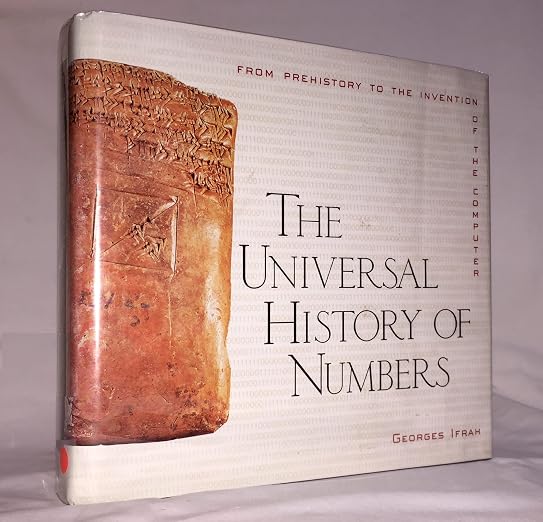
0The Universal History of Numbers: From Prehistory to the Invention of the Computer
Georges Ifrah
1.379.000 ₫
 0
0Hittite Prayers (SBL - Writings from the Ancient World, 11)
Singer
Liên hệ
0 0
0Isis and Sarapis in the Roman World (Religions in the Graeco-Roman World, 124)
Sarolta A. Takacs
Liên hệ
0 0
0The Arabic Writing Tradition, an Historical Survey, Volume 13: Mathematical Geography and Cartography in Islam and Their Legacy in the West
Fuat Sezgin
8.194.000 ₫