
Lưu ý: Hình bìa chỉ mang tính minh họa — không phải ảnh sách thực tế. Nội dung và bản quyền sách được đảm bảo chính hãng từ nhà xuất bản. Chợ Sách chỉ cam kết sách do người bán cung cấp là sách chính hãng; khiếu nại về bìa khác hình minh họa sẽ được xem xét từng trường hợp.
Tommaso Traetta and the Fusion of Italian and French Opera in Parma
Tác giả: George W. Loomis
NXB: Academica Press
Chi tiết sản phẩm
Mô tả nội dung sách Tommaso Traetta and the Fusion of Italian and French Opera in Parma - George W. Loomis
Thông tin sách: Tommaso Traetta and the Fusion of Italian and French Opera in Parma (Hardcover, 416 trang) – Academica Press, 2022. Ngôn ngữ: Tiếng Anh.
In 1759, the court of the Italian Duchy of Parma adopted the inspiration of cultural creators who recommended a reform of Italian opera along French lines. These writers favored combining Italian-style music with the wider range of musical genres and scenic variety of French opera. As the music critic and commentator George W. Loomis shows in this groundbreaking volume, the young composer Tommaso Traetta was engaged to create new operas responding to these demands. As Loomis deftly demonstrates, Traetta’s operas were largely oriented toward the formal aria, a byproduct of making Italian music an essential component of this cross-cultural fusion. Nevertheless, they were strikingly innovative in their use of chorus, integrated dance, and accompanied recitative. Structurally, the operas reflect the French distinction between scenes of action and divertissements. After a brief flowering, the project was abandoned, primarily for lack of interest, but Traetta’s Parma operas deserve a previously unrecognized place in the history of Western music for their stimulation of opera seria in Italy and beyond. This included the works of Wolfgang Amadeus Mozart, whose genre-defining Idomeneo (1781) proved a turning point in the development of opera. Editorial Reviews Review This book by George Loomis, one of today’s finest music critics, is an important and essential contribution to our knowledge of a significant composer of the eighteenth-century Neapolitan School. Tommaso Traetta was, together with other great musicians from the Puglia region (then part of the Kingdom of Naples), one of the dominant figures of the Neapolitan musical world. With their operas these musicians influenced the theaters of all Europe, with a strong presence even in St. Petersburg. Mozart declared to his father that one performance in Naples--the fundamental city for eighteenth-century music--was more important than two hundred performances in Germany. Loomis sheds new and vivid light on this world, still largely unknown. Thousands of manuscripts lie silent in the glorious library of the Naples Conservatory. Their time will come! But we are grateful today to the author of this book for his passion, knowledge and affection in deepening our appreciation of Tommaso Traetta, whose statue rises in front of the theater in his native city.--Riccardo Muti, internationally recognized conductor and music director of the Chicago Symphony Orchestra, www.riccardomuti.com
This is a fundamental work and one that is indispensable for understanding Tommaso Traetta’s contribution to the European scene in the eighteenth century.
The first reform of the opera seria took place in Venice, under the impulse of Apostolo Zeno: librettos were too complex, requiring too many characters, multiplying scenes and parallel plots. To tighten the action, Zeno turned to Racine and the French tragedy. When Duke Philip, married to Louise-Elizabeth of France, brought du Tillot to Parma, the Parisian influence brought a new wind to Parma, one impassioned for Rameau: Traetta and Gluck were in charge of the second reform of the opera seria. The ballet, choruses, and ensembles of the French tragédie lyrique are reintroduced in the new model, sometimes using Rameau’s dances. Ippolito and I Tindaridi were the first examples of the Italy/France fusion. It is when Traetta goes to Vienna and then to Saint Petersburg that he finds his true style with Ifigenia and Antigona. This new model for seria—more spectacular and dramatic—is quickly adopted. The door is opened to the young Mozart for Lucio Silla but especially for Idomeneo - whose libretto is inspired by a libretto of Campra for the Paris opera!”
--Christophe Rousset, conductor, harpsichordist, director of Les Talens Lyriques
George Loomis’s masterful dissertation on the Parma operas, in expanded and updated form, is an invaluable contribution to Traetta scholarship.
-- Margaret Butler, Associate Professor of Musicology, University of Wisconsin
Operagoers today know something of Italy’s composers from Monteverdi up to Vivaldi, and quite a lot from Rossini up to the 20th century. But the seventy-odd years in between were some of the field’s busiest and most fruitful, and from them we still hear very little in the theater. A thorough study of Tommaso Traetta’s innovations might go some way towards changing that. George Loomis’s book--delving comprehensively into his musical language, dramaturgy, genres, formal structures, and especially his creative receptivity to developments from abroad--is in any case essential reading for everyone who wants to understand the whole of opera’s long journey in its homeland.
--Will Crutchfield, conductor, musicologist, director of Teatro Nuovo
About the Author George Loomis has more than 30 years of experience as a writer about music in the United States, Europe, and Russia. His reviews and articles have appeared in many publications, including the Financial Times, the New York Times, the International Herald Tribune, the New Criterion, Opera magazine and Musical America. A graduate of the University of Michigan School of Music and its Law School, he also holds a Ph.D. in music history from Yale. After practicing law in New York, he resumed musical pursuits full-time in 1996 upon moving to Russia, where he wrote regularly for the American and British press. Since 2012 he has been New York co-correspondent for Opera. He is a permanent member of the jury of the International Opera Awards and is co-chairman of the Music Critics Association of North America's New Opera Award Committee.Giá bán
3.989.000 ₫
Đánh giá sản phẩm
Sách cùng thể loại
Xem tất cả → 0
0Sách Oxford Phrasal Verbs Dictionary (Elt)
363.000 ₫
 0
0Sách After The Quake (Paperback)
519.000 ₫
 0
0Theatre: Brief Version
Robert Cohen
3.278.000 ₫
5.452.000 ₫
 0
0A World of Art (6th Edition)
Henry M. Sayre
335.000 ₫
 0
0Art History
Marilyn Stokstad, Michael W. Cothren
5.360.000 ₫
5.730.000 ₫
 0
0Art History, Combined Volume (4th Edition)
Marilyn Stokstad, Michael W. Cothren
9.341.000 ₫
 0
0The Humanities: Culture, Continuity and Change, Volume 1 (3rd Edition)
Henry M. Sayre
5.283.000 ₫
6.337.000 ₫
 0
0Music for Sight Singing (8th Edition)
Robert Ottman, Nancy Rogers
3.487.000 ₫
3.868.000 ₫
 0
0Scott Kelby's Digital Photography
Scott Kelby, Cindy W. Snyder, Jennifer Concepcion
951.000 ₫
2.294.000 ₫
 0
0Drum Sound and Drum Tuning: Bridging Science and Creativity (Audio Engineering Society Presents)
Rob Toulson
6.413.000 ₫
 0
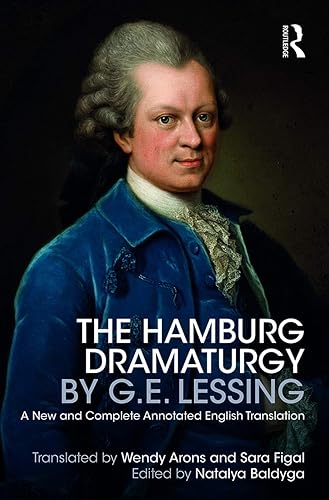
0The Hamburg Dramaturgy by G.E. Lessing: A New and Complete Annotated English Translation
Natalya Baldyga, Wendy Arons, Sara Figal
8.522.000 ₫
10.652.000 ₫
 0
0Music: An Appreciation
Roger Kamien, Anita Kamien
1.475.000 ₫
13.110.000 ₫