
Lưu ý: Hình bìa chỉ mang tính minh họa — không phải ảnh sách thực tế. Nội dung và bản quyền sách được đảm bảo chính hãng từ nhà xuất bản. Chợ Sách chỉ cam kết sách do người bán cung cấp là sách chính hãng; khiếu nại về bìa khác hình minh họa sẽ được xem xét từng trường hợp.
The Oregon Experiment (Center for Environmental Structure Series)
Tác giả: Christopher Alexander
Chi tiết sản phẩm
- #1,557,296 in Books
- #787 in Urban & Land Use Planning
- #945 in Architectural Drafting & Presentation
- #44,255 in Schools & Teaching
Về tác giả — Christopher Alexander
Follow authors to get new release updates, plus improved recommendations. For nearly 50+ years Christopher Alexander has challenged the architectural establishment, sometimes uncomfortably, to pay more attention to the human beings at the center of design. To do so he has combined top-flight scientific training, award-winning architectural research, patient observation and testing throughout his building projects, and a radical but profoundly influential set of ideas that have extended far beyond the realm of architecture. In the process Alexander has authored a series of groundbreaking works, including A Pattern Language: Towns, Buildings, Construction and The Timeless Way of Building. His most recent publication continues that ground-breaking work, the four-volume book set, The Nature of Order: An Essay on the Art of Building and the Nature of the Universe, incorporates more than 30 years of research, study, teaching and building. It was described by Laura Miller of the New York Times “the kind of book every serious reader should wrestle with once in a while: [a] fat, challenging, grandiose tract that encourages you to take apart the way you think and put it back together again.” Alexander was born in Vienna, Austria and raised in Oxford and Chichester, England. He was awarded the top open scholarship to Trinity College, Cambridge in 1954, in chemistry and physics, and went on to read mathematics at Cambridge. He took his doctorate in architecture at Harvard (the first Ph.D. in architecture ever awarded at Harvard), and was elected to the society of Fellows at Harvard University in 1961. During the same period he worked at MIT in transportation theory and in computer science, and at Harvard in cognitive science. His pioneering ideas from that time were known to be highly influential in those fields. Alexander became Professor of Architecture at the University of California, Berkeley in 1963, and taught there continuously for 38 years, becoming Professor Emeritus in 2001. He founded the Center for Environmental Structure in 1967, published hundreds of papers and several dozen books, and built more than 200 buildings around the world. Alexander is widely recognized as the father of the pattern language movement in computer science, which has led to important innovations such as Wiki, and new kinds of Object-Oriented Programming. He is the recipient of the first medal for research ever given by the American Institute of Architects, and he has been honoured repeatedly for his buildings in many parts of the world. He was elected Fellow of the American Academy of Arts and Sciences in 1996 for his contributions to architecture, including his groundbreaking work on how the built environment affects the lives of people. Read more about this author Read less about this author Read more about this author Read less about this author
Đánh giá từ chuyên gia
Review"The Oregon Experiment is perhaps this decade's best candidate for a permanently important book."--Rory Campbell, The Boston Globe
Book DescriptionA book that brilliantly applies the insight of A Pattern Language to a real-world project
Mô tả nội dung sách The Oregon Experiment (Center for Environmental Structure Series) - Christopher Alexander
Thông tin sách: The Oregon Experiment (Center for Environmental Structure Series) (Hardcover, 202 trang) – Oxford University Press, 1975. Ngôn ngữ: Tiếng Anh.
After a ten-year silence, Christopher Alexander and his colleagues at the Center for Environmental Structure are not publishing a major statement in the form of three works which will, in their words, "lay the basis for an entirely new approach to architecture, building, and planning, which will, we hope, replace existing ideas and practices entirely." The three books are The Timeless Way of Building, A Pattern Language, and The Oregon Experiment. At the core of these books is the idea that people should design for themselves their own houses, streets, and communities. This idea may be radical (it implies a radical transformation fo the architectural profession) but it comes simply from the observation that most of the wonderful places of the world were not made by architects but by the people. This book is the master plan for the University of Oregon, and is now being implemented at that university; but it shows at the same time how any community the size of a university or small town might go about designing its own future environment-with all members of the community participating personally. It is a concrete example at the Center's theories in practice, showing in simple detail, with numerous illustrations, how to implement six guiding principles: organic order, participation, piecemeal growth, patterns, diagnosis, and coordination.Giá bán
1.869.000 ₫
Đánh giá sản phẩm(33)
Khách hàng cũng mua
 0
0Sách cùng tác giả Christopher Alexander
Xem tất cả →

Sách cùng thể loại
Xem tất cả → 0
0Sách Oxford Phrasal Verbs Dictionary (Elt)
363.000 ₫
 0
0Sách After The Quake (Paperback)
519.000 ₫
 0
0Liao Architecture
Nancy Shatzman Steinhardt
384.000 ₫
 0
0NKBA Professional Resource Library, 9 Volume Set
NKBA (National Kitchen and Bath Association)
Liên hệ
0 0
0Greater Medieval Houses of England and Wales, 1300–1500: Volume 3, Southern England
Anthony Emery
Liên hệ
0 0
0Early Buddhist Architecture in Context: The Great Stūpa at Amarāvatī (ca. 300 BCE-300 CE) (Brill's Indological Library, 43)
Akira Shimada
Liên hệ
0 0
0Technical Design Solutions for Theatre (Technical Brief Collection S)
Ben Sammler, Don Harvey
2.407.000 ₫
 0
0Interiors: text with Design CD-ROM
Karla J. Nielson, David A Taylor
260.000 ₫
 0
0Understanding Aesthetics for the Merchandising and Design Professional
Ann Marie Fiore, Patricia A. Kimle
2.468.000 ₫
 0
0Adobe Illustrator 2022: The Professional Portfolio
Against The Clock
2.024.000 ₫
 0
0The Fashion Industry and Its Careers: Bundle Book + Studio Access Card
Michele M. Granger, Sheryl A. Farnan
2.932.000 ₫
 0
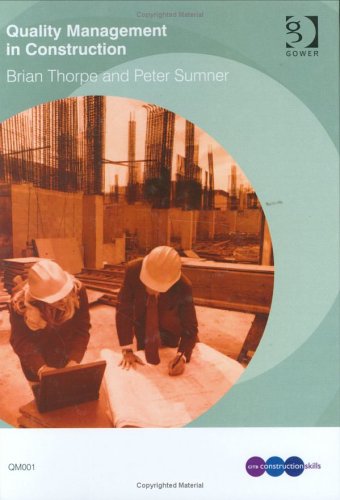
0Quality Management In Construction (THE LEADING CONSTRUCTION SERIES)
Brian Thorpe, Peter Sumner
Liên hệ
0