Lưu ý: Hình bìa chỉ mang tính minh họa — không phải ảnh sách thực tế. Nội dung và bản quyền sách được đảm bảo chính hãng từ nhà xuất bản. Chợ Sách chỉ cam kết sách do người bán cung cấp là sách chính hãng; khiếu nại về bìa khác hình minh họa sẽ được xem xét từng trường hợp.
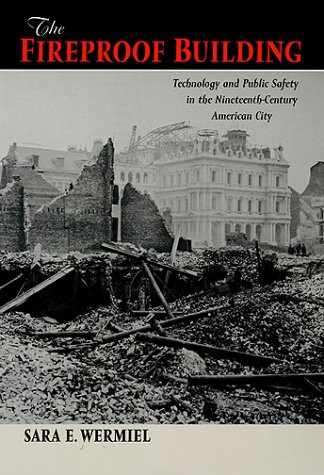
The Fireproof Building: Technology and Public Safety in the Nineteenth-Century American City (Studies in Industry and Society)
Tác giả: Sara E. Wermiel
Chi tiết sản phẩm
Mô tả nội dung sách The Fireproof Building: Technology and Public Safety in the Nineteenth-Century American City (Studies in Industry and Society) - Sara E. Wermiel
Thông tin sách: The Fireproof Building: Technology and Public Safety in the Nineteenth-Century American City (Studies in Industry and Society) (Hardcover, 312 trang) – The Johns Hopkins University Press, 2000. Ngôn ngữ: Tiếng Anh.
From the first American attempts at fireproof construction in the 1790s to the steel and concrete high-rises of the early twentieth century, The Fireproof Building traces the development of structural fire protection in America and its important consequences for building construction as well as for the safety of cities. Urban conflagrations destroyed many downtowns in the nineteenth century. To protect their property, some owners made their buildings fire-resistive--or as they were called in the past, fireproof--by using new kinds of noncombustible materials and arranging the space inside to check the spread of fire. As these methods improved and owners replaced combustible buildings with fireproof ones, urban firestorms became a thing of the past.
Sara E. Wermiel explores the work of the pioneers of structural fire protection, such as the architect Peter B. Wight. She explains when and why the materials of fireproof construction, including structural iron and hollow tile, came into use. Yet the relatively high cost of these materials discouraged owners from adopting them. The system finally began to be used widely at the end of the nineteenth century, after large cities had enacted building laws mandating fireproof construction for tall buildings and theaters. Wermiel shows the impact of building laws on the development of technology: the laws stimulated demand for fireproofing materials, which spurred innovation and drove down costs.
Although introduced simply as noncombustible substitutes for wood, the materials of the fireproof building--notably, structural iron and steel, and concrete--became the standard for commercial buildings in the twentieth century. Not only did they reduce the risk of fire, but after architects adapted them to create the skeleton frame--the sine qua non of the modern skyscraper--they revolutionized building construction.
"Sweeping fires are so unusual in American cities today that the once dreaded word conflagration sounds quaint to modern ears. This relative peace is quite different from the situation in the past. In the nineteenth century, even excluding the period of the Civil War, the United States averaged about one conflagration per year--conflagrations defined in this case as a fire involving groups of buildings that destroyed property valued at the time at $1 million or more. No part of the nation was exempt: great fires incinerated parts of city centers from Portland, Maine, to Charleston, South Carolina, downtown Seattle as well as Chicago."--from the Introduction
Giá bán
3.958.000 ₫
Đánh giá sản phẩm
Sách cùng thể loại
Xem tất cả → 0
0Small Animal Nutrition
Agar
328.000 ₫
1.541.000 ₫
 0
0Hartmann & Kester's Plant Propagation: Principles and Practices (8th Edition)
Hudson T. Hartmann, Dale E. Kester, Fred T. Davies Jr., Robert L. Geneve
Liên hệ
0 0
0Wedgwood's Catalogue of Cameos, Intaglios, Medals, Bas-Reliefs, Busts, and Small Statues: Reprinted from the Edition of 1787 (Cambridge Library Collection - Art and Architecture)
Josiah Wedgwood, Eliza Meteyard
1.049.000 ₫
 0
0Berlin: Schwimm- und Radsporthalle (German Edition)
Dominique Perrault
Liên hệ
0 0
0Quick Star Quilts & Beyond: 20 Dazzling Projects - Classroom-Tested Techniques - Galaxy of Inspiration
Jan P Krentz
Liên hệ
0 0
0DEWALT HVAC Code Reference: Based on the 2018 International Mechanical Code (DEWALT Series)
American Contractor's Exam Services
Liên hệ
0 0
0Mathematics for the Trades: A Guided Approach (6th Edition)
Robert A. Carman, Hal M. Saunders
Liên hệ
0 0
02006 International Building Code - Softcover Version: Softcover Version (International Building Code)
International Code Council
379.000 ₫
 0
0Audel Questions and Answers for Electrician's Examinations (Audel Technical Trades Series)
Paul Rosenberg
622.000 ₫
 0
0Jeep Wrangler, 1987-2008 (Hayne's Automotive Repair Manual)
Haynes
1.672.000 ₫
 0
0Ford Pick-ups/Expedition and Lincoln Navigator, 1997-2009 (Chilton's Total Car Care Repair Manual)
Chilton
Liên hệ
0 0
0Robinson's Genetics for Cat Breeders and Veterinarians
Carolyn M. Vella, Lorraine M. Shelton B.S., John J. McGonagle, Terry W. Stanglein V.M.
2.884.000 ₫