
Lưu ý: Hình bìa chỉ mang tính minh họa — không phải ảnh sách thực tế. Nội dung và bản quyền sách được đảm bảo chính hãng từ nhà xuất bản. Chợ Sách chỉ cam kết sách do người bán cung cấp là sách chính hãng; khiếu nại về bìa khác hình minh họa sẽ được xem xét từng trường hợp.
Chi tiết sản phẩm
- #5,640,402 in Books
- #515 in Cultural Policy
- #1,226 in South African History
- #2,222 in Film & Television
Về tác giả — Jacqueline Maingard
Follow authors to get new release updates, plus improved recommendations.
Đánh giá từ chuyên gia
About the AuthorJacqueline Maingard is a Senior Lecturer and Head of Education in the Department of Drama: Theatre, Film, Television at the University of Bristol. She was formerly at the University of the Witwatersrand, Johannesburg.
Jacqueline MaingardJacqueline Maingard is a Senior Lecturer and Head of Education in the Department of Drama: Theatre, Film, Television at the University of Bristol. She was formerly at the University of the Witwatersrand, Johannesburg.
Mô tả nội dung sách South African National Cinema - Jacqueline Maingard
Thông tin sách: South African National Cinema (Kindle, 236 trang) – Routledge, 2008. Ngôn ngữ: Tiếng Anh.
South African National Cinema examines how cinema in South Africa represents national identities, particularly with regard to race. This significant and unique contribution establishes interrelationships between South African cinema and key points in South Africa’s history, showing how cinema figures in the making, entrenching and undoing of apartheid. This study spans the twentieth century and beyond through detailed analyses of selected films, beginning with De Voortrekkers (1916) through to Mapantsula (1988) and films produced post apartheid, including Drum (2004), Tsotsi (2005) and Zulu Love Letter (2004).
Jacqueline Maingard discusses how cinema reproduced and constructed a white national identity, taking readers through cinema’s role in building white Afrikaner nationalism in the 1930s and 1940s. She then moves to examine film culture and modernity in the development of black audiences from the 1920s to the 1950s, especially in a group of films that includes Jim Comes to Joburg (1949) and Come Back, Africa (1959). Jacqueline Maingard also considers the effects of the apartheid state’s film subsidy system in the 1960s and 1970s and focuses on cinema against apartheid in the 1980s. She reflects upon shifting national cinema policies following the first democratic election in 1994 and how it became possible for the first time to imagine an inclusive national film culture.
Illustrated throughout with excellent visual examples, this cinema history will be of value to film scholars and historians, as well as to practitioners in South Africa today.
Giá bán
889.000 ₫
Đánh giá sản phẩm
Sách cùng thể loại
Xem tất cả → 0
02050 China: Becoming a Great Modern Socialist Country (Understanding Xi Jinping’s Governance)
Angang Hu, Yilong Yan, Xiao Tang, Shenglong Liu
Liên hệ
0 0
0Discovering Reality: Feminist Perspectives on Epistemology, Metaphysics, Methodology, and Philosophy of Science (Synthese Library, 161)
Sandra Harding, Merrill B. Hintikka
1.151.000 ₫
1.967.000 ₫
 0
0State and Society in Nigeria
Gavin Williams
Liên hệ
0 0
0Trouble in Paradise: Twenty-Four Essays on the Social History of American Art (Historical Materialism Book Series, 331)
Alan Wallach
6.424.000 ₫
6.752.000 ₫
 0
0Avicenna and the Aristotelian Tradition: Introduction to Reading Avicenna's Philosophical Works. Second, Revised and Enlarged Edition, Including an Inventory of Avicenna’s Authentic Works
Dimitri Gutas
Liên hệ
0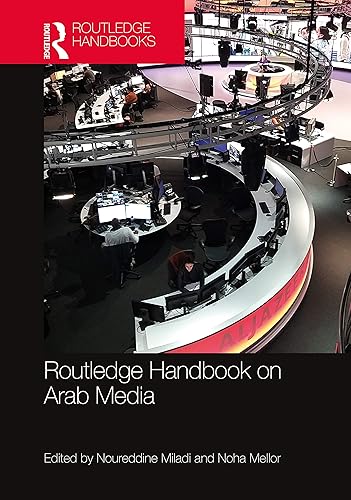 0
0Routledge Handbook on Arab Media
Noureddine Miladi, Noha Mellor
7.500.000 ₫
9.997.000 ₫
 0
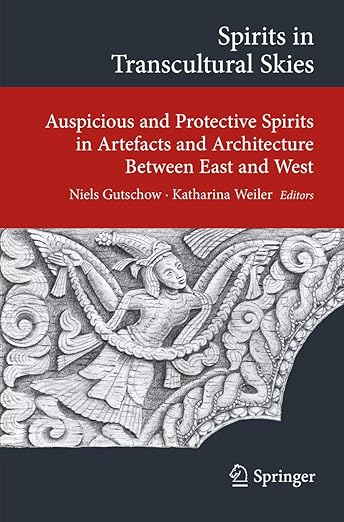
0Spirits in Transcultural Skies: Auspicious and Protective Spirits in Artefacts and Architecture Between East and West (Transcultural Research – ... on Asia and Europe in a Global Context)
Niels Gutschow, Katharina Weiler
Liên hệ
0 0
0Problems of Contemporary Militarism (Routledge Library Editions: International Security Studies)
Asbjørn Eide, Marek Thee
6.555.000 ₫
 0
0Aristotle’s Criticism of Plato’s ‘Timaeus’
George S. Claghorn
1.803.000 ₫
 0
0The Life of Henry More - Parts 1 and 2 (ARCHIVES INTERNATIONALES D'HISTOIRE DES IDEES/)
Richard Ward, Robert Crocker, Sarah Hutton, S. Hutton, Cecil Courtney, Michelle Courtney, R. Crocker, Rupert Hall
7.113.000 ₫
 0
0Discrimination in Football (Routledge Research in Sport, Culture and Society)
Christos Kassimeris
6.555.000 ₫
 0
0Ethics in Computing: A Concise Module (Undergraduate Topics in Computer Science)
Joseph Migga Kizza
851.000 ₫