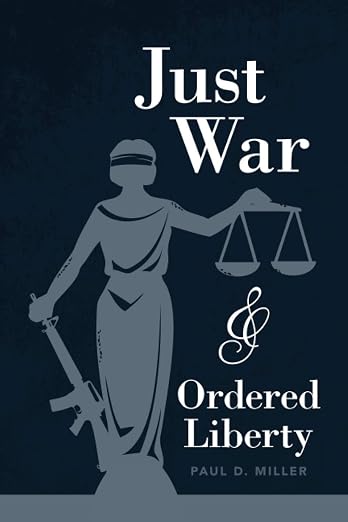
Lưu ý: Hình bìa chỉ mang tính minh họa — không phải ảnh sách thực tế. Nội dung và bản quyền sách được đảm bảo chính hãng từ nhà xuất bản. Chợ Sách chỉ cam kết sách do người bán cung cấp là sách chính hãng; khiếu nại về bìa khác hình minh họa sẽ được xem xét từng trường hợp.
Chi tiết sản phẩm
- #2,101,044 in Books
- #1,684 in Social Philosophy
- #4,709 in Philosophy
- #14,519 in International & World Politics
Về tác giả — Paul D. Miller
Follow authors to get new release updates, plus improved recommendations. Dr. Paul D. Miller is a Professor in the Practice of International Affairs at Georgetown University's School of Foreign Service. He serves as co-chair of the Global Politics and Security concentration in the MSFS program. He is also a Senior Fellow with the Scowcroft Center for Strategy and Security at the Atlantic Council and a research fellow with the Ethics and Religious Liberty Commission. Dr. Miller previously served in the US Army (including a tour in Afghanistan), as an analyst with the CIA, and as Director for Afghanistan and Pakistan on the National Security Council staff. Read more about this author Read less about this author Read more about this author Read less about this author
Đánh giá từ chuyên gia
Review'As the world confronts fresh threats, ranging from new great powers determined to challenge the existing international order to apocalyptic non-state armed groups determined to destroy that order entirely, there is renewed urgency to consider questions about the justice of war. Thankfully, in this important new book, Paul D. Miller, shows how we can do that. It combines a rare blend of sophisticated and careful historical analysis that yields not one but three just war traditions with the sort of insight into the critical dilemmas of today that can only stem from practical experience on the front line. Doing so, it both expertly illuminates the past in a fresh way and provides a compelling moral framework for thinking about, and debating, the challenges we face today, and will come to face tomorrow.' Alex J. Bellamy, Professor of Peace and Conflict Studies, The University of Queensland, Australia'Miller explicates the core presuppositions of Augustinian realism such as order and justice, and important intersections with classical liberalism, in the context of intractable conflicts, such as in Afghanistan. This is a thoughtful, useful book on the many issues of just war thinking, especially when it comes to jus post bellum and ending wars well.' Eric Patterson, Author of Just American Wars: Ethical Dilemmas in U.S. Military History (2018)'Paul D. Miller's latest book is a well-written, well-crafted meditation on both the actual and intellectual history of the justice of political violence. Gripping current cases – from drones to cyber to Syria – are considered. Combining his own extensive military intelligence expertise (especially in Afghanistan) with his deep theoretical knowledge, Miller builds a meaty, rewarding, important volume focusing on when, if ever, to go to war, and which duties arise in its aftermath. Terrific in breadth, research, application, and overall construction, its best achievement resides in its combination of historical mastery and moral plausibility.' Brian Orend, Author of The Morality of War (2013) and War and Political Theory (2019).'Miller examines the trajectory of just war theory by tracing it from its Augustinian origins to a principal shift that occurred in the Westphalian period, and into the current Liberal tradition ... Highly recommended.' R. Ward, Choice
Book DescriptionWhen is war just? What does justice require? Miller draws from the intellectual history of just war to assess contemporary warfare.
Mô tả nội dung sách Just War and Ordered Liberty - Paul D. Miller
Thông tin sách: Just War and Ordered Liberty (Kindle, 278 trang) – Cambridge University Press, 2021. Ngôn ngữ: Tiếng Anh.
When is war just? What does justice require? If we lack a commonly-accepted understanding of justice – and thus of just war – what answers can we find in the intellectual history of just war? Miller argues that just war thinking should be understood as unfolding in three traditions: the Augustinian, the Westphalian, and the Liberal, each resting on distinct understandings of natural law, justice, and sovereignty. The central ideas of the Augustinian tradition (sovereignty as responsibility for the common good) can and should be recovered and worked into the Liberal tradition, for which human rights serves the same function. In this reconstructed Augustinian Liberal vision, the violent disruption of ordered liberty is the injury in response to which force may be used and war may be justly waged. Justice requires the vindication and restoration of ordered liberty in, through, and after warfare.Giá bán
Liên hệ
Đánh giá sản phẩm(11)
Khách hàng cũng mua
 0
0Sách cùng tác giả Paul D. Miller
Xem tất cả →Sách cùng thể loại
Xem tất cả → 0
0Occupational Therapies without Borders - Volume 2: Towards an ecology of occupation-based practices
Frank Kronenberg BSc(OT) BA(Ed), Nick Pollard PhD MA MSc DipCOT FHEA, Dikaios Sakellariou PhD MSc BSc FHEA
2.064.000 ₫
 0
0Topology And Physics
Chen Ning Yang
Liên hệ
0 0
0Physics Of Massive Neutrinos, The (World Scientific Lecture Notes in Physics)
B Kayser
Liên hệ
0 0
0A First Course In Integral Equations: Solutions Manual (Second Edition)
Abdul-Majid Wazwaz
Liên hệ
0 0
0General System Theory: Foundations, Development, Applications (Revised Edition)
Ludwig Von Bertalanffy
561.000 ₫
 0
0FIVE-DIMENSIONAL PHYSICS: CLASSICAL AND QUANTUM CONSEQUENCES OF KALUZA-KLEIN COSMOLOGY
Wesson Paul S
3.050.000 ₫
 0
0Probability And Expectation (Mathematical Olympiad)
Zun Shan
822.000 ₫
 0
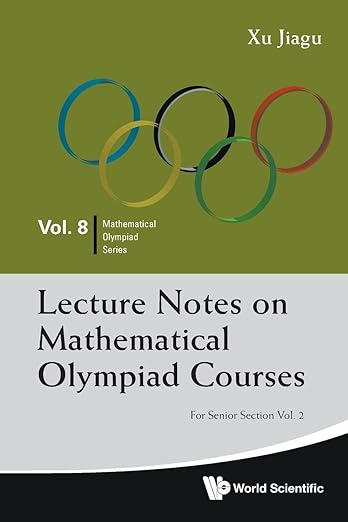
0Lecture Notes On Mathematical Olympiad Courses: For Senior Section - Volume 2
Jiagu Xu
690.000 ₫
 0
0MADAME WU CHIEN-SHIUNG: THE FIRST LADY OF PHYSICS RESEARCH
Chiang Tsai-Chien
Liên hệ
0 0
0FOUNDATIONS OF QUANTUM CHROMODYNAMICS: AN INTRODUCTION TO PERTURBATIVE METHODS IN GAUGE THEORIES (3RD EDITION) (World Scientific Lecture Notes in Physics)
Muta T
2.171.000 ₫
 0
0The Geometry of the Octonions
Dray Tevian
Liên hệ
0 0
0PARTICLES AND QUANTUM FIELDS
Hagen Kleinert
Liên hệ
0