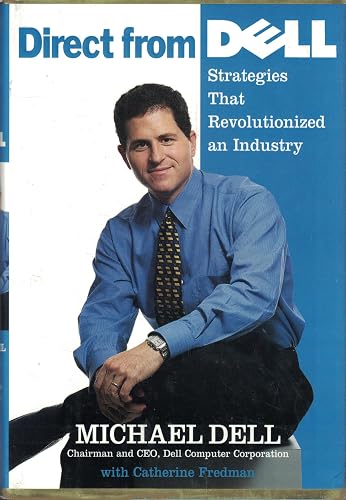
Lưu ý: Hình bìa chỉ mang tính minh họa — không phải ảnh sách thực tế. Nội dung và bản quyền sách được đảm bảo chính hãng từ nhà xuất bản. Chợ Sách chỉ cam kết sách do người bán cung cấp là sách chính hãng; khiếu nại về bìa khác hình minh họa sẽ được xem xét từng trường hợp.
Direct From Dell: Strategies That Revolutionized an Industry
Tác giả: Michael Dell, Catherine Fredman
NXB: Harper Business
Tiết kiệm 397.000 ₫
Chi tiết sản phẩm
Mô tả nội dung sách Direct From Dell: Strategies That Revolutionized an Industry - Michael Dell
Thông tin sách: Direct From Dell: Strategies That Revolutionized an Industry (Hardcover, 256 trang) – Harper Business, 1999. Ngôn ngữ: Tiếng Anh.
In 1983, Michael S. Dell, then an incoming freshman at the University of Texas at Austin, drove away from his parents' Houston home in a white BMW he'd bought selling subscriptions to his hometown newspaper. In the backseat were three personal computers.Today, he is the Chairman and Chief Executive Officer of Dell Computer Corporation, an $18 billion company, the second-largest manufacturer and marketer of computers in the world. Founded on a deceptively simple premise--to deliver high-performance computer systems directly to the end user--Dell Computer is the envy of its competition, constantly growing at five times the industry rate, and a perennial darling of Wall Street: its stock is up more than 36,000 percent this decade, and more than 200 percent in the last year.
In Direct From Dell, Michael Dell himself tells the incredible story of Dell Computer's successful rise, beginning in his college dorm room with $1,000 in capital.
In these pages, you'll see the formation of a great visionary--and a great company. You'll meet the young Dell who, at the tender age of eight, had already begun looking "to eliminate unnecessary steps" and who, as a numbers-loving adolescent, was inspired by a newfound fascination with computers to save his money to buy a coveted Apple II--only to promptly take it apart. You'll encounter a young visionary who, upon witnessing the inefficiencies of an exploding industry, challenged conventional wisdom and set out to do nothing less than beat IBM at its own game. In so doing, Dell forever changed the way things "had always been done" in the computer industry.
You'll also see the birth of a Dell hallmark--the direct model--which, in its ability to reach the customer directly, eliminated not only a substantial middleman markup but also the possibility of costly excess inventory, setting the stage for other extraordinary achievements. In an industry notorious for its unreliable service, Dell utilized its direct customer relationships to pioneer the concept of customer "support"--and didn't rest until the caliber of its service was rivaled only by the quality of its products and its speed of delivery.
But the story of Dell Computer is no fairy tale. Marked by uncharacteristically rapid growth, the company was faced with challenges that could have threatened its very existence. From forays into retail to under- (and over-) developed product lines, Dell learned some hard lessons along the way--and emerged stronger as a result.
The strategies born of those times--unrivaled speed to market; superior customer service; a fierce commitment to producing constantly high-quality custom-made systems--heralded what has perhaps been the company's crowning achievement: an early exploitation of the Internet. One of the first companies to actually make money online, Dell is now selling more than $12 million worth of systems per day over www.dell.com.
Not just for CEOs or those in high tech, the strategies revealed in Direct From Dell are invaluable to managers in a broad cross section of industries. From starting a successful business to pioneering computer sales and service over the Internet, Dell shares his perspectives on:
- Why it's infinitely better for any business starting out to have too little capital, rather than too much
- How studying your customers--not your competition--will give you a greater competitive edge
- Why it can be life-threatening to your company to pursue too many good ideas--or to grow too fast
- Why it's essential to run a P&L on every area of your business
- Why your people prose a greater threat to the health of your business than your competition does
- How you can exploit your competition's weakness by exposing its greatest strength
- How integrating your business virtually can make the difference between being quick--and being dead
Revealing nothing less than a new model for doing business in the information age, Direct From Dell is both an extraordinary business success story and a manifesto for revolutionizing any industry.
- How integrating your business virtually can make the difference between being quick--and being dead
- How you can exploit your competition's weakness by exposing its greatest strength
- Why your people prose a greater threat to the health of your business than your competition does
- Why it's essential to run a P&L on every area of your business
- Why it can be life-threatening to your company to pursue too many good ideas--or to grow too fast
- How studying your customers--not your competition--will give you a greater competitive edge
“Dell’s story is the stuff high-tech legends are made of.” - Forbes
From the Back Cover In 1983, Michael S. Dell, then an incoming freshman at the University of Texas at Austin, drove away from his parents' Houston home in a white BMW he'd bought selling subscriptions to his hometown newspaper. In the backseat were three personal computers.Today, he is the Chairman and Chief Executive Officer of Dell Computer Corporation, an $18 billion company, the second-largest manufacturer and marketer of computers in the world. Founded on a deceptively simple premise--to deliver high-performance computer systems directly to the end user--Dell Computer is the envy of its competition, constantly growing at five times the industry rate, and a perennial darling of Wall Street: its stock is up more than 36,000 percent this decade, and more than 200 percent in the last year.
In Direct From Dell, Michael Dell himself tells the incredible story of Dell Computer's successful rise, beginning in his college dorm room with $1,000 in capital.
In these pages, you'll see the formation of a great visionary--and a great company. You'll meet the young Dell who, at the tender age of eight, had already begun looking "to eliminate unnecessary steps" and who, as a numbers-loving adolescent, was inspired by a newfound fascination with computers to save his money to buy a coveted Apple II--only to promptly take it apart. You'll encounter a young visionary who, upon witnessing the inefficiencies of an exploding industry, challenged conventional wisdom and set out to do nothing less than beat IBM at its own game. In so doing, Dell forever changed the way things "had always been done" in the computer industry.
You'll also see the birth of a Dell hallmark--the direct model--which, in its ability to reach the customer directly, eliminated not only a substantial middleman markup but also the possibility of costly excess inventory, setting the stage for other extraordinary achievements. In an industry notorious for its unreliable service, Dell utilized its direct customer relationships to pioneer the concept of customer "support"--and didn't rest until the caliber of its service was rivaled only by the quality of its products and its speed of delivery.
But the story of Dell Computer is no fairy tale. Marked by uncharacteristically rapid growth, the company was faced with challenges that could have threatened its very existence. From forays into retail to under- (and over-) developed product lines, Dell learned some hard lessons along the way--and emerged stronger as a result.
The strategies born of those times--unrivaled speed to market; superior customer service; a fierce commitment to producing constantly high-quality custom-made systems--heralded what has perhaps been the company's crowning achievement: an early exploitation of the Internet. One of the first companies to actually make money online, Dell is now selling more than $12 million worth of systems per day over www.dell.com.
Not just for CEOs or those in high tech, the strategies revealed in Direct From Dell are invaluable to managers in a broad cross section of industries. From starting a successful business to pioneering computer sales and service over the Internet, Dell shares his perspectives on:
- Why it's infinitely better for any business starting out to have too little capital, rather than too much
- How studying your customers--not your competition--will give you a greater competitive edge
- Why it can be life-threatening to your company to pursue too many good ideas--or to grow too fast
- Why it's essential to run a P&L on every area of your business
- Why your people prose a greater threat to the health of your business than your competition does
- How you can exploit your competition's weakness by exposing its greatest strength
- How integrating your business virtually can make the difference between being quick--and being dead
Revealing nothing less than a new model for doing business in the information age, Direct From Dell is both an extraordinary business success story and a manifesto for revolutionizing any industry.
- How integrating your business virtually can make the difference between being quick--and being dead
- How you can exploit your competition's weakness by exposing its greatest strength
- Why your people prose a greater threat to the health of your business than your competition does
- Why it's essential to run a P&L on every area of your business
- Why it can be life-threatening to your company to pursue too many good ideas--or to grow too fast
- How studying your customers--not your competition--will give you a greater competitive edge
Michael Dell is the chairman of the board of directors of Dell Inc., the world's largest computer-systems company. In 1992, he became the youngest CEO ever to earn a ranking on the Fortune 500. Mr. Dell serves on the Foundation Board of the World Economic Forum, the executive committee of the International Business Council, and is a member of the U.S. Business Council. He also serves on the U.S. President's Council of Advisors on Science and Technology and the governing board of the Indian School of Business in Hyderabad, India.
Michael Dell is Chairman and CEO of Dell Computer Corporation. Catherine Fredman collaborated with Andrew Grove, Chairman of Intel, on his best-selling book, Only the Paranoid Survive. Excerpt. © Reprinted by permission. All rights reserved.
The Birth of Being Direct
I first experienced the power--and the rewards--of being direct when I was twelve years old. The father of my best friend in Houston was a pretty avid stamp collector, so naturally my friend and I wanted to get into stamp collecting, too. To fund my interest in stamps, I got a job as a water boy in a Chinese restaurant two blocks from my house. I started reading stamp journals just for fun, and soon began noticing that prices were rising. Before long, my interest in stamps began to shift from the joy of collecting to the idea that there was something here that my mother, a stockbroker, would have termed "a commercial opportunity."
In our household, you couldn't help being aware of commercial opportunities. The discussions at our dinner table in the 1970s were about what the chairman of the Federal Reserve was doing and how it affected the economy and the inflation rate; the oil crisis; which companies to invest in, and which stocks to sell and buy. The economy in Houston was booming at the time, and the market for collectibles was quite active. It was obvious to me from what I'd read and heard that the value of stamps was increasing, and being a fairly resourceful kid, I saw this as an opportunity.
My friend and I had already bought stamps at an auction, and since I knew even then that people rarely did something for nothing, I assumed that the auctioneers were making a decent fee. Rather than pay them to buy the stamps, I thought it would be fun to create my own auction. Then I could learn even more about stamps and collect a commission in the process.
I was about to embark upon one of my very first business ventures.
First, I got a bunch of people in the neighborhood to consign their stamps to me. Then I advertised "Dell's Stamps" in Linn's Stamp Journal, the trade journal of the day. And then I typed, with one finger, a twelve-page catalog (I didn't yet know how to type, nor did I have a computer) and mailed it out.
Much to my surprise, I made $2,000. And I learned an early, powerful lesson about the rewards of eliminating the middleman. I also learned that if you've got a good idea, it pays to do something about it.
Seeing the Pattern
A few years later, I saw the chance to seize an even greater opportunity. When I was sixteen, I got a summer job selling newspaper subscriptions to The Houston Post. At the time, the newspaper gave its salespeople a list of new phone numbers issued by the telephone company and told us to cold call them. It struck me as a pretty random way of approaching new business.
I soon noticed a pattern, however, based on the feedback I was getting from potential customers during these conversations. There were two kinds of people who almost always bought subscriptions to the Post: people who had just married and people who had just moved into new houses or apartments. With this in mind, I wondered, "How could you find all the people who are getting mortgages or getting married?"
After asking around, I discovered that when a couple wanted to get married, they had to go to the county courthouse and get a marriage license. They also had to provide the address to which the license would be sent. In the state of Texas, that information is public. So I hired a couple of my high school buddies and we canvassed the courthouses in the sixteen counties surrounding the Houston area, collecting the names and addresses of the newly (or soon-to-be-newly) married.
Then I found out that certain companies compiled lists of people who had applied for mortgages. These lists were ranked by the size of the mortgage. You could easily identify the people with the largest mortgages and go after those high-potential customers first.* I targeted these people, creating a personalized letter and offering them a subscription to the newspaper.
By this time, summer was over and it was time to go back to high school. As important as school was, I found that it could be very disruptive to a steady income. I had worked hard to create a lucrative system and didn't want to just throw it away, so I handled the bulk of the work during the week after school, and I did the follow-up work on Saturday mornings. The subscriptions came in by the thousands.
One day, my history and economics teacher assigned us a project for which we had to file our tax returns. Based on what I had made selling newspaper subscriptions, my income was about $18,000 that year. At first, my teacher corrected me, assuming I had missed the decimal place. When she realized I hadn't, she became even more dismayed.
To her surprise, I had made more money that year than she had.
Giá bìa: 853.000 ₫
456.000 ₫
Đánh giá sản phẩm(260)
Sách cùng tác giả Michael Dell
Xem tất cả →
Sách Chơi Đẹp Nhưng Phải Thắng - Hành Trình Của Một CEO - Từ Nhà Sá
150.000 ₫
 -24%
-24%Sách Những bộ óc tỷ đô: Michael Dell - Bố già công nghệ và cuộc cách mạng chiếc máy tính cá nhân
156.000 ₫
Những Bộ Óc Tỷ Đô - Michael Dell - Bố Già Công Nghệ Và Cuộc Cách Mạng Chiếc Máy Tính Cá Nhân
205.000 ₫
Những Bộ Óc Tỷ Đô - Michael Dell - Bố Già Công Nghệ Và Cuộc Cách Mạng Chiếc Máy Tính Cá Nhân
205.000 ₫
Sách Những Bộ Óc Tỷ Đô - Michael Dell - Bố Già Công Nghệ Và Cuộc Cá
111.000 ₫
Sách cùng thể loại
Xem tất cả → -7%
-7%Sách The 4-Hour Work Week : Escape The 9-5, Live Anywhere And Join The New Rich
Timothy Ferriss
696.000 ₫
749.000 ₫
 -3%
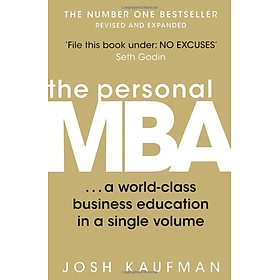
-3%Sách The Personal MBA: A World-Class Business Education In A Single Volume - Paperback
551.000 ₫
568.000 ₫
 -5%
-5%Sách How Will You Measure Your Life?
540.000 ₫
568.000 ₫
 -5%
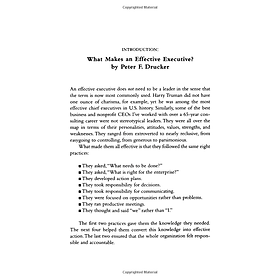
-5%Sách The Effective Executive: The Definitive Guide to Getting the Right Things Done (Harperbusiness Essentials)
443.600 ₫
467.000 ₫
 -3%
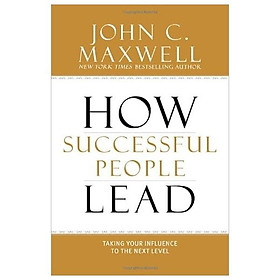
-3%Sách How Successful People Lead: Taking Your Influence To The Next Level (Hardcover)
453.000 ₫
467.000 ₫
 0
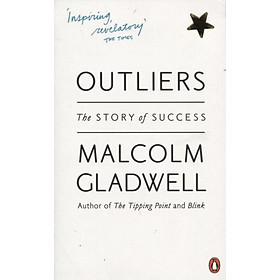
0Sách tiếng Anh - Outliers - The Story Of Success
492.750 ₫
 0
0Sách Dombey And Son
156.000 ₫
 0
0Rechtshandbuch Facility Management (German Edition)
Eike N. Najork, Tobias Gabriel, Markus J. Goetzmann, Regina Lamm, Nils Mrazek
1.354.000 ₫
 0
0Value and Unequal Exchange in International Trade: The Geography of Global Capitalist Exploitation (Routledge Frontiers of Political Economy)
Andrea Ricci
6.555.000 ₫
 0
0Tourism and Development in the Developing World (Routledge Perspectives on Development) (Volume 6)
David J. Telfer, Richard Sharpley
1.549.000 ₫
 0
0Exploring Seriality on Screen (Routledge Research in Cultural and Media Studies)
Ariane Hudelet, Anne Crémieux
6.555.000 ₫
 0
0Brief history of economics, a: artful approaches to the dismal science (2nd edition)
E Ray Canterbery
1.261.000 ₫